A LONG-AWAITED EXHIBITION AT THE MUSEUM OF FINE ARTS IN OSIJEK The Return of the brilliant painter Julije Knifer
The exhibition is conceptually centred on the artist’s relationship with paper, inviting the audience to explore the inner mechanisms that drove his creative process
This spring, the brilliant painter – one of the most important Croatian artists of the 20th century – returns to his hometown of Osijek after more than 40 years! It has indeed been that long since Julije Knifer’s last solo exhibition, organised by the Museum of Fine Arts (Muzej likovnih umjetnosti – MLU) in Osijek, back in 1984. The new exhibition was originally planned for 2024, but had to be postponed due to the museum’s temporary closure for renovation.
An intimate presentation
For quite some time now, Ana Knifer – the artist’s daughter and devoted guardian of his legacy – and Valentina Radoš, museum advisor and expert in modern art, have been diligently preparing this exhibition, which has already sparked significant public interest.
The connections between Julije Knifer and Osijek – the city he left after graduating from high school and to which he rarely returned – are known primarily thanks to the efforts of Vlastimir Kusik, a long-time curator of the Museum (formerly Gallery) of Fine Arts. Unfortunately, it is only in recent decades that the wider public has become aware that this great painter once lived here.
“Unlike the big retrospective organised by the Museum of Contemporary Art in Zagreb in 2014, this exhibition is focused on the artist’s relationship with paper, inviting visitors to understand the inner mechanisms that shaped his work. Although centred on a single material, it encompasses a wide range of techniques: sketches, collages, drawings, and pastels – from early croquis to distinctive graphite works on paper. The exhibition is conceived as an intimate presentation of a diverse field of artistic practice, as Knifer developed a very specific relationship with paper over the years. From the tactile quality of small-format sheets to later large-scale graphite works, and even analytical descriptions of paper in his diaries, the so-called Journal banale. Since the 1950s, Knifer kept daily notes describing his working process, everyday life, and frustrations. Over time, his syntax adopted the rhythm of the meander, with sentences transforming into a visual language.
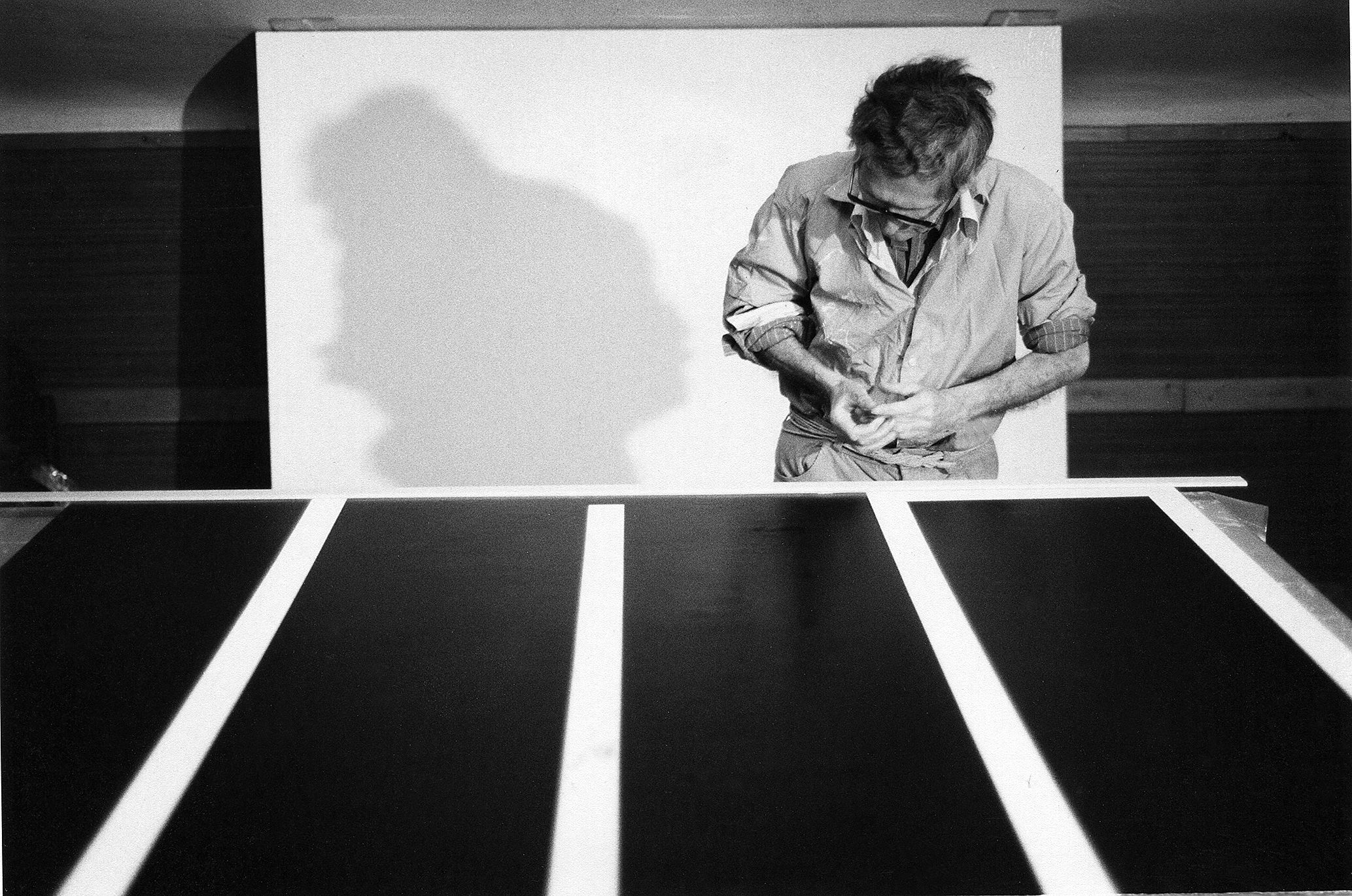
In the 1990s, he began writing with coloured pencils, structuring text in meander-like forms. He also collected samples of different types of paper, carefully selecting high-quality handmade papers for his graphite works, while also collecting thin bakery sheets. The latter he used as support for his hand while covering the paper’s surface with countless graphite strokes, creating uniform, often luminous surfaces. The exhibition also offers an opportunity to clarify the term “graphite works.” Knifer used this term because he created them with graphite pencils, distinguishing them from murals, which he also produced”, explains Valentina Radoš, co-author of the exhibition concept alongside Ana Knifer.
Around 300 works will be presented, mostly from Ana Knifer’s collection. The exhibition Papers: The Measure of Freedom will be accompanied by an extensive catalogue featuring reproductions and new texts by leading experts in art history and theory.
From Osijek to Paris
Julije Knifer was born in Osijek on 23 April 1924. He studied painting at the Academy of Fine Arts in Zagreb in the early 1950s and was one of the founders of the Gorgona group, active in Zagreb from 1959 to 1966. In 1961, he participated in the first New Tendencies exhibition in Zagreb, and later exhibited internationally – including the São Paulo Biennial in 1973 and the Venice Biennale in 1976 alongside sculptor Ivan Kožarić, his colleague from the Gorgona group. He represented Croatia once more at the Venice Biennale in 2001, selected by curator Zvonko Maković. Knifer spent the last ten years of his life in Paris, where he
passed away on 7 December 2004. The exhibition at the Museum of Fine Arts in Osijek opens on 15 May and will remain on view until mid-August.
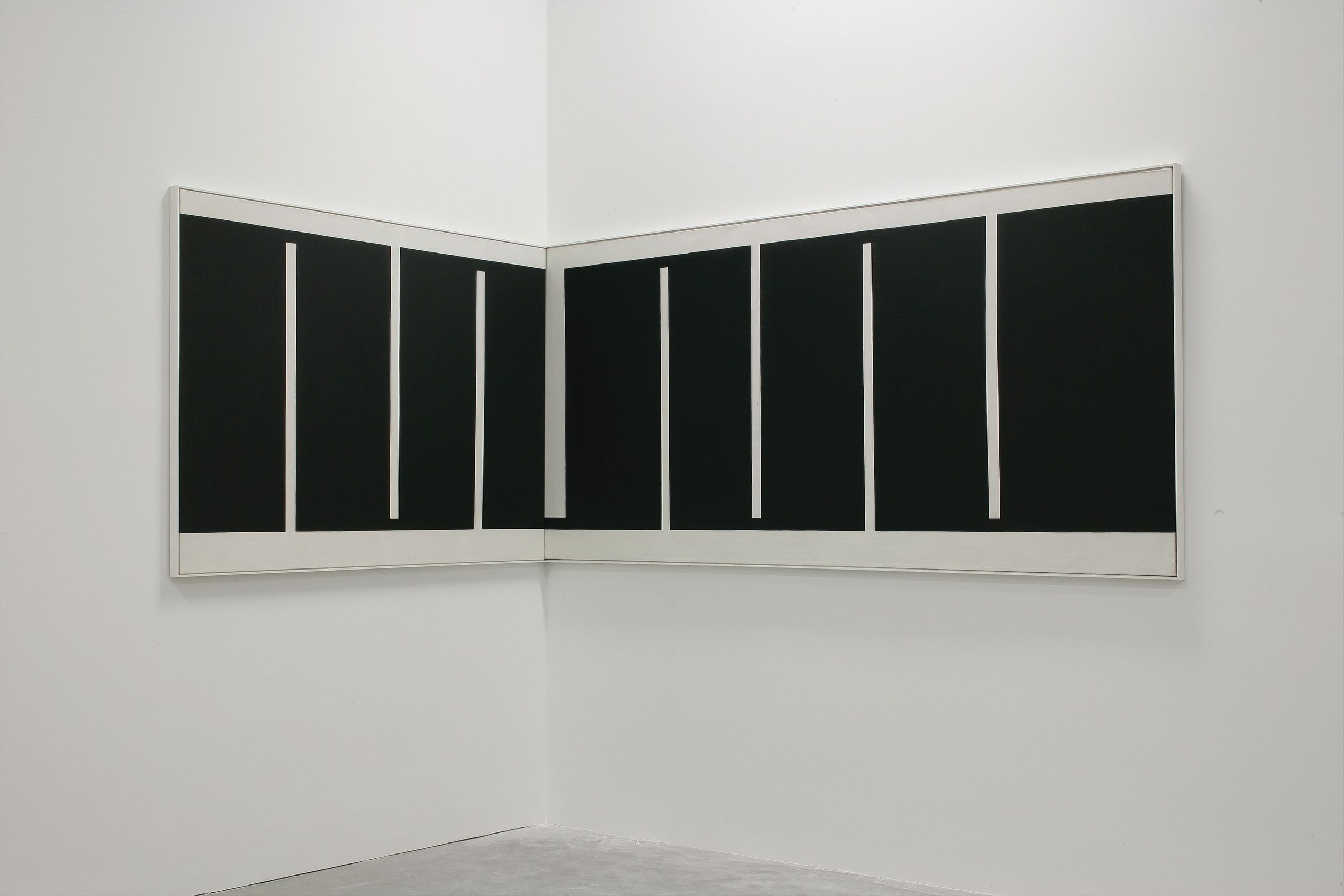
MEANDER – A distinctive and consistent motif
“The meander is the only consistently recognisable motif in Knifer’s work from the early 1960s until the end of his life, executed in countless variations and techniques. It is characterised by a uniform rhythm of continuous form and the contrast of black and white. In the 1970s, he began working first with pencil and then with graphite, covering the meander surfaces with countless strokes until he achieved maximum saturation of black, a process he continued until the end of his life,” explains Valentina Radoš.
She adds that Knifer’s work was influenced by the Russian avant-garde, particularly Malevich’s Suprematism. He was also interested in existentialist philosophy and the absurd, the New Wave and the Nouveau Roman, as well as serial music. Among writers, he was especially drawn to Albert Camus and Marcel Proust, and among painters to Piero della Francesca, Frans Hals, Paul Cézanne, Juan Gris, and Yves Klein.
Contact: www.mlu.hr
Text: Ivana Rab Guljaš