TIME TRAVEL DJ Tijesto plays Hits for Foodies
Lokšice, trganci, zavezanci, čikovi, taške and tarana, gomboce and čikmaši, pasta with poppy seeds, cheese or walnuts… it might not be music, but trust us, it’s all hits
Don’t let the catchy title fool you – the following lines are not about to announce a global electronic music star (or his undiscovered Pannonian counterpart, “DJ Tijesto”). Behind this electrifying, futuristic title lies a glimpse into one of the most authentic segments of the gastronomic heritage of Slavonia and Baranja, and perhaps Croatia. A heritage as authentic as the unfamiliar names it carries for most readers and visitors: lokšice, trganci, zavezanci, čikovi, taške, tarana, gomboce, čikmaši… It’s only thanks to words “pasta with poppy seeds, cheese and walnuts” that we begin to connect the dots – forget Tiësto, DJs and electronic music, silly, this is all about traditional sweets and pastries! Never forget this Croatian lesson: tijesto or tisto means dough, pasta or pastry.
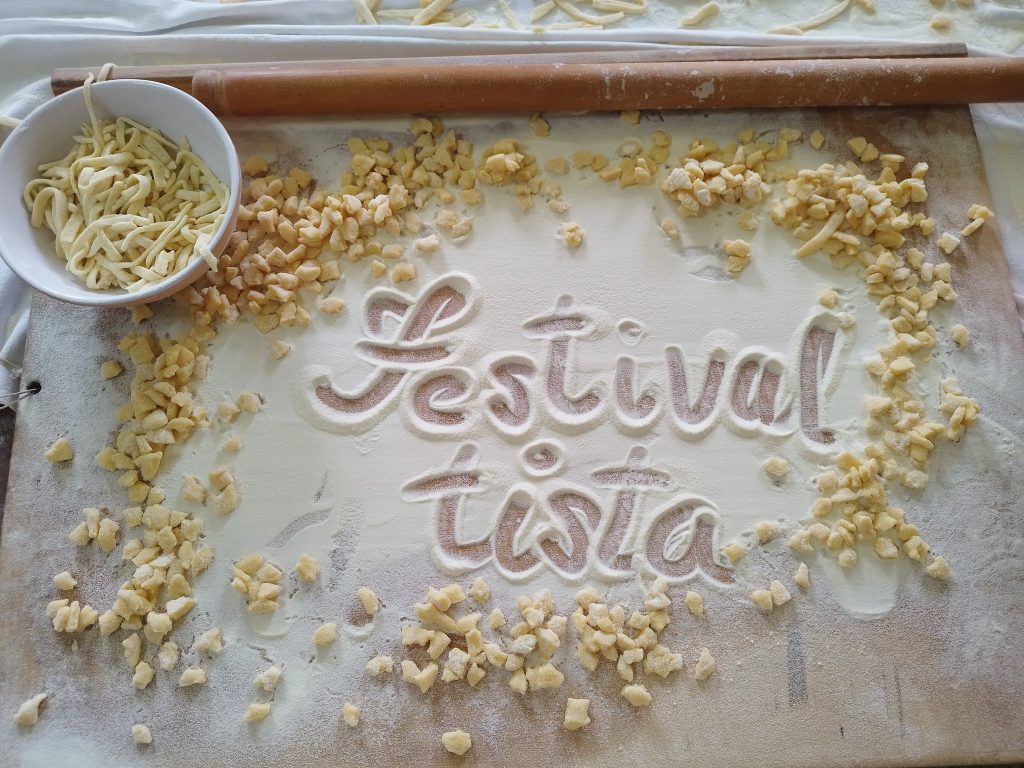
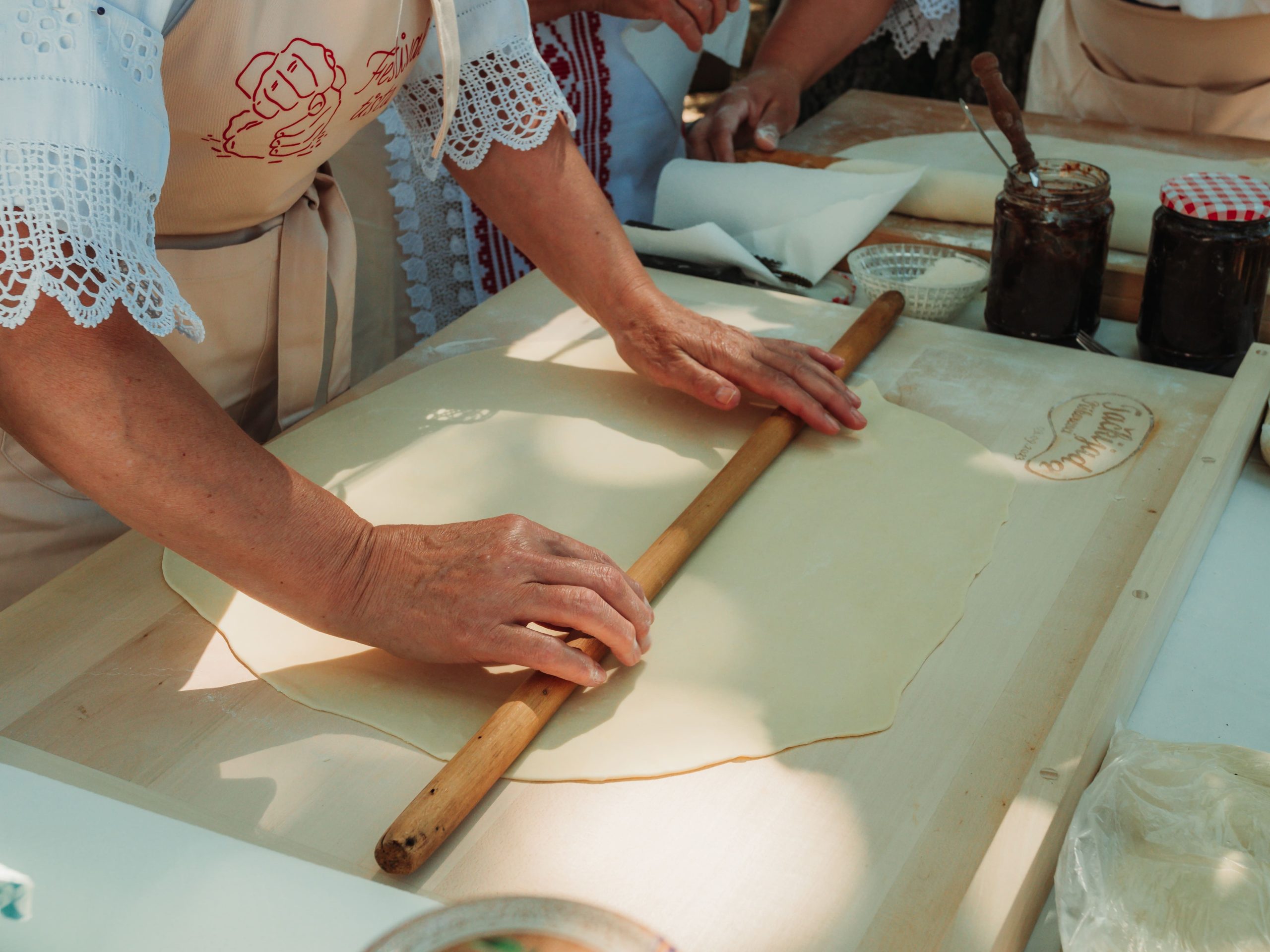
Dough is made from the riches of the black Pannonian soil – it’s soft, hand-crafted, shaped into forms that tell a story of migration and cultural exchange. Most traditional recipes for side dishes and desserts made of dough arrived in Slavonia, and especially Baranja, carried in the bundles of settlers who sailed down the Danube from Austria and Germany some three centuries ago in search of a better life. Their culinary skills – whether in preparing side dishes for goulashes and stews or melt-inyour-mouth desserts – were gradually adopted by the skilled hands of the local Šokac women (and likely a few Šokac men), enriched and passed on to future generations.

Visit Festival tista in Topolje (Festival tista u Topolju) at the beginning of June – taking place at one of the symbolic centres of the Danube-region Croats, the Šokci – and you will quickly discover this is not just another “what our ancestors ate” type of festival. You have stepped into an authentic cultural and gastronomic time machine, heading straight into the heart of a Pannonian culinary dream.

You can taste a hint of this doughbased heritage throughout the year in several restaurants across Slavonia and Baranja. Try, for example, the excellent taške with plum jam, plum dumplings, or thick homemade noodles at Baranjska kuća in Karanac, Josić in Zmajevac, Kuća dida Tunje in Đakovo, Didin konak in Kopačevo, the riverside Čarda Kod Baranjca in Podravlje, Stari mlin on the Danube promenade in Dalj, as well as Projekt 9, a restaurant boat moored along the Osijek promenade. Finally, don’t miss šufnudle (also known as čikmaši) – the potato-based dumplings traditionally prepared at the Meandar restaurant of Hotel Osijek.
Contacts:
- Festival Tista: www.facebook.com/LandranjeBaranjom
- Restaurant Baranjska kuća: www.baranjska-kuca.com
- Restaurant and winery Josić: www.josic.hr
- Restaurant Kuća dida Tunje
- Restaurant Didin konak: www.didinkonak.hr
- Restaurant Čarda kod Baranjca: www.facebook.com/kod.baranjca
- Restaurant Krčma Stari mlin: www.facebook.com/starimlindalj
- Restaurant ship Projekt9: www.projekt9.hr
- Restaurant Meandar: www.restoranmeandar.hr
Text: Luka Jakopčić