WHO ARE YOUR HOSTS REALLY? The people of Osijek, much like their city, have mastered the art of balance
Ana Kurtović, Helena Sablić-Tomić and Krešimir Lacković share what makes Osijek – and Osijek’s people – who they are
“As a psychologist, I always carry a bit of déformation professionnelle in my back pocket. But when it comes to Osijek (and Osijek’s people), that becomes a bit tricky. It’s hard to stay objective about a city that’s not just a point on the map, but an emotional space I’m immersed in”, reflects Professor Ana Kurtović of the Faculty of Humanities and Social Sciences in Osijek, when asked to help us describe the kind of hosts Osijek’s visitors can expect to find here.
According to Professor Kurtović, the people of Osijek largely draw their character from the city they live in. So what is Osijek really like, and what are its people like?

At a serious advantage
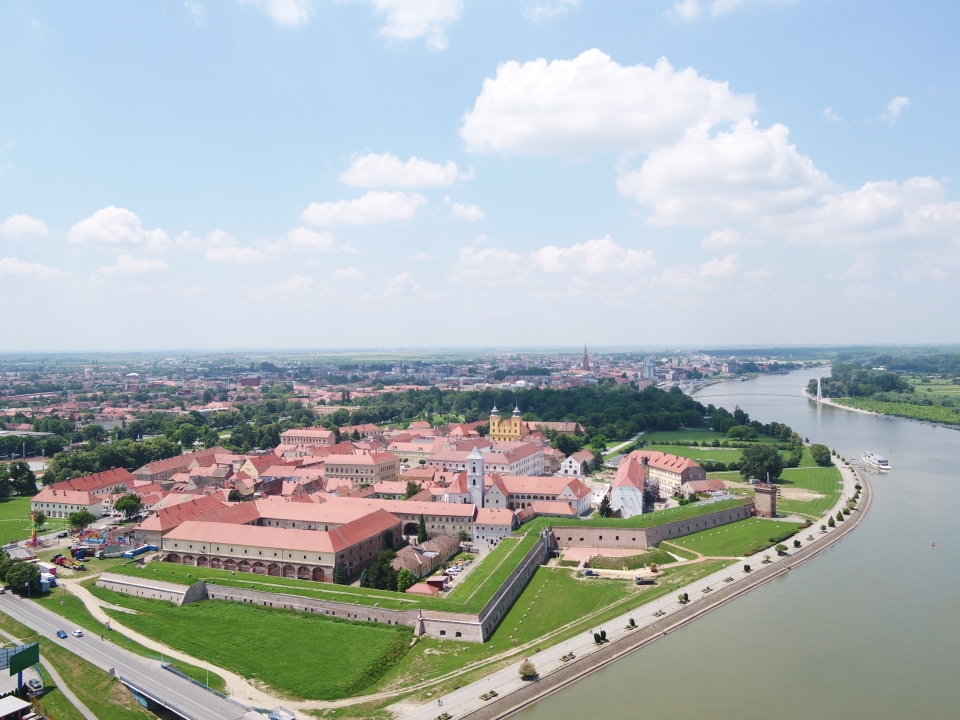
“I’d say Osijek has the rare combination of calm and vibrancy, like the person who’s found perfect balance through therapy. With its 22 parks and the river Drava whispering that we should go with the flow, this city seems to have invented mindfulness long before it became a trend. Psychological research has long shown that spending time in nature, near water and greenery, can help reduce stress, increase connection, and stimulate creativity. If that’s true (and it is), then Osijek has a serious advantage. And so do the people of Osijek!” she says.
As a university city, Osijek beats the constant pulse of youth. “Students are like spontaneous daily wake-up calls – they remind us that energy, curiosity, and ambition aren’t privileges of the young, but choices of anyone willing to keep learning. I work with them daily, and I can confirm: they are the city in motion and its rhythm, its psychological vitality, and, for me personally, a great inspiration.”
In her words, Osijek isn’t a metropolis that grinds you down, but a space that lets you breathe. “A city with enough quiet to hear your own thoughts, but enough life that you never get bored. And if you ever need a bit more stimulation, you don’t have to look far. Summer concerts along the Drava, urban festivals, art, and culinary events will wake even the sleepiest among us. In short, Osijek’s people (just like their city) know how to find balance – between calm and rhythm, reflection and good fun. And that’s no small feat, not for a human nor a city,” she concludes.
Culture in motion
Academic Helena Sablić-Tomić, Dean of the Academy of Arts and Culture in Osijek, notes that the people of Osijek have always gravitated toward cultural content that steps beyond the mainstream. “In the last decade, I’ve noticed a strong rise of independent organisations and alternative art emerging from our urban landscape. Osijek’s neighbourhoods are turning into stages for events, and young artists are breathing new life into forgotten spaces. The independent scene keeps growing, stepping out of traditional venues and into the community, into clubs, onto the streets, creating new culture enthusiasts. It’s wonderful to see the city come alive during any cultural event that brings people out to the promenade, the Old Fortress (Tvrđa), the Park of Culture, the Urania Cinema, the Cultural Centre, or the park near the Školjka installation,” she says.
In her view, Osijek’s people are “culture in motion” – they walk proudly through the city’s open-air stage, enjoying street art, performances, and concerts. “Osijek also nurtures a culture of living, so every event here becomes a fusion of art and the art of life, making Osijek truly a human-scale city,” she concludes.

Passion in the stands
That “in-motion” energy, of course, applies to sport, says Dr. Krešimir Lacković, sports journalist at Glas Slavonije and Assistant Professor at the Sjever University. “People love to swim and row on the Drava, run, walk, and cycle along the ever-stretching promenade. They keep building their muscles in the city gyms. In recent years, we’ve been sending a new image to the media and social networks, and instead of bećari and snaše, we are now represented by the sculpted legice and lege of the Kopika beach,” he says with a laugh.
He reminds us that Osijek has produced Nobel laureates, an Oscar winner, and a World Cup Golden Boot winner, “a combination unique in the world. Science, culture, and sport are part of our identity. The University, the Theatre and…? Opus Arena! The most modern and beautiful stadium in Croatia has become a tourist attraction in its own right. The Gradski vrt sports hall has hosted numerous world and Olympic champions, especially during the annual Gymnastics World Cup,” he notes.
According to Lacković, you can best feel the soul and pulse of Osijek – and its people – at sporting events. “In the stands, even the calmest locals are moved with an immense passion. There’s a special emotion when the Croatian national team plays here, especially the Vatreni. It’s love and pride, infused with defiance,” he drives the point straight into the net.

Linguistic treasures
This magazine’s Croatian language editor, Prof. Ana Mikić Čolić, co-authored (with Mirjam Milas and Lorna Rajle) the book Osječki gradski govor ‒ Jezične dumine Osječana (Osijek Urban Dialect – Language Curiosities of Osijek’s Citizens). The text combines academic research with a popular-science approach, making it a kind of Osijek-themed keepsake. Since locals use this city dialect in everyday informal situations, pick up a few words from the book and you’ll understand them better and fall for Osijek even faster.
Written by: Ivana Rab Guljaš